
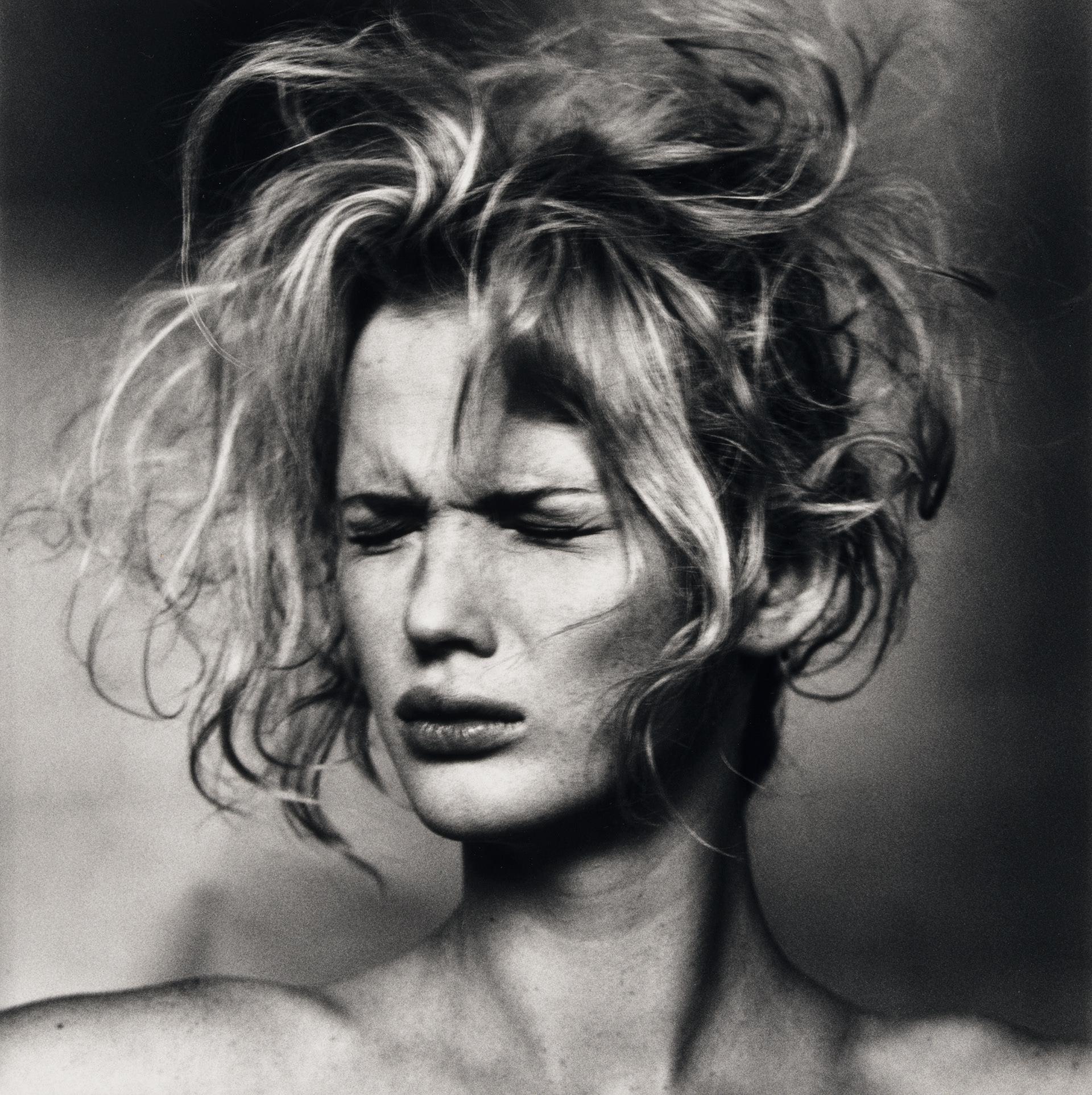
Irving Penn, Young Woman Hearing Noise, New York, 2003. Gelatin silver print, 10 1/4 x 10 1/4 inches (25.9 x 25.9 cm), Edition of 3. © Condé Nast Courtesy Gagosia
Irving Penn, a lesson in seeing
In Gstaad, the Gagosian gallery pays tribute to one of the most precise eyes in the history of photography.
Sometimes it takes very little to understand a photographer. With Irving Penn, that “very little” becomes almost a philosophy: a cool light, a grey backdrop, a body, a flower, a crushed cigarette. In Gstaad, the Gagosian gallery presents an exhibition spanning nearly seven decades of work, bringing together fashion photography, portraits and still lifes, the three territories where Penn redefined photographic modernity. What strikes immediately is the almost surgical precision of his gaze. Irving Penn photographed the way a sculptor works.
The corner of the studio
Among Penn’s most famous inventions is a device that is almost childishly simple: two panels forming an angle. In the 1940s, he decided to place his subjects in this studio corner, a narrow space where bodies appear slightly compressed. This simple setup creates an unexpected tension: the people being photographed no longer quite know how to stand. Some open up, while others fold inward. The writer Truman Capote curled up there like a wary animal. The dancer Martha Graham appears almost hieratic. Irving Penn would observe his subjects for a long time before releasing the shutter. He used to say that the role of the photographer was to wait until the person “stopped playing a role.” This fragile moment, somewhere between pose and truth, became his signature.
The silent revolution of fashion
When Irving Penn began photographing for Vogue in the 1940s, fashion photography was still dominated by spectacular settings. He did exactly the opposite. Gone were luxurious salons, romantic gardens and elaborate staging. He placed his models in front of a bare backdrop and constructed the image like architecture. A leg becomes a line. A coat becomes a structure. A gesture becomes a tension. Some of these photographs, such as those taken with Jean Patchett or Lisa Fonssagrives, who would later become his wife, appear almost abstract. Through them, Irving Penn transformed fashion into a form of visual minimalism, long before the term itself became fashionable.
Invisible trades
In 1950, Vogue magazine gave him an unusual assignment: to photograph the small trades of Paris. Penn set up his studio and invited chimney sweeps, bakers, coal merchants, waiters and firefighters to come and pose, dressed in their work clothes and holding their tools. The series, titled Small Trades, became one of the most moving projects of his entire body of work. Each person was photographed in exactly the same way: facing the camera, neutral background, direct light. A fish seller receives the same attention as a movie star.
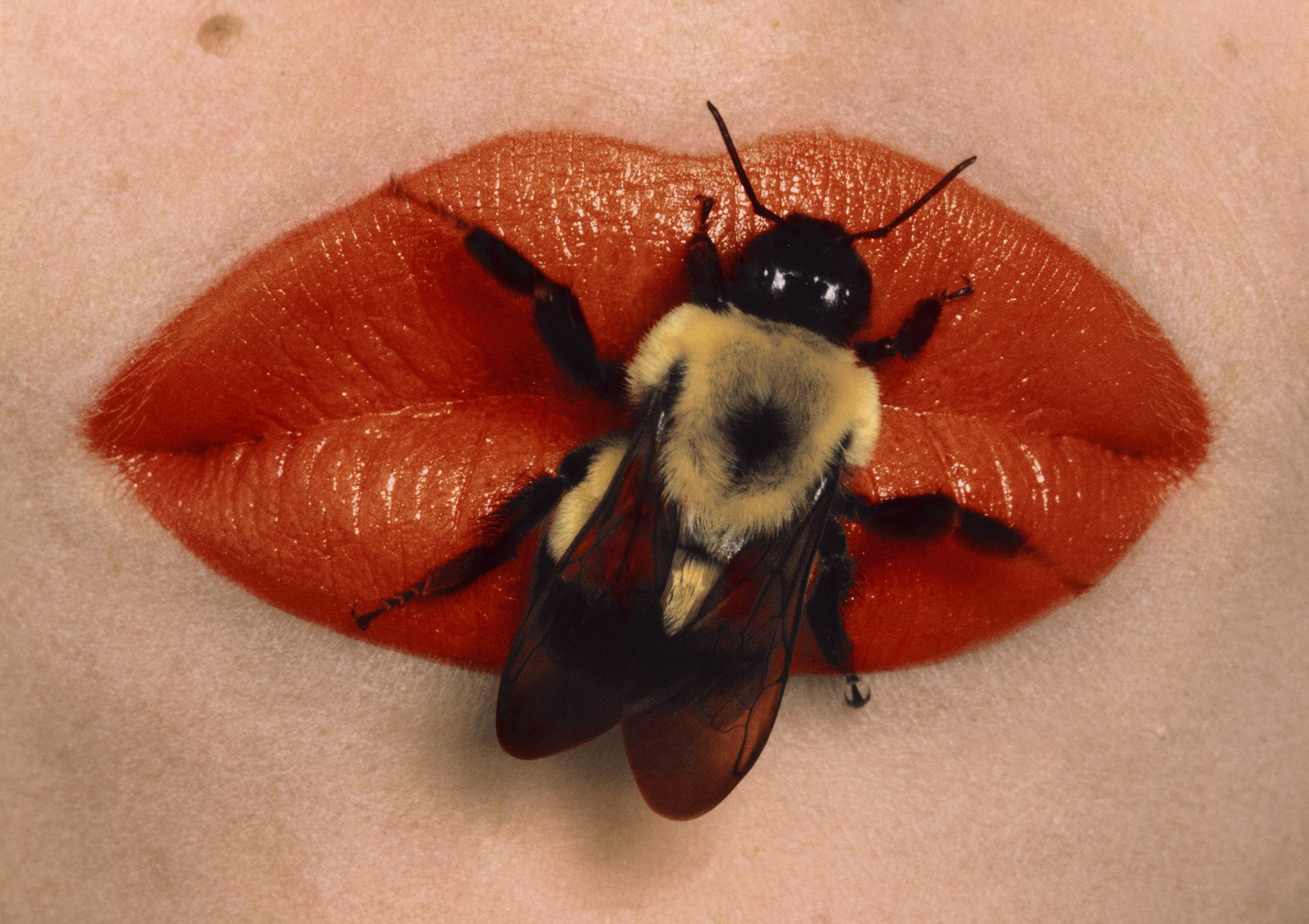
Irving Penn, Bee on Lips, New York, 1995. Dye transfer print, 16 x 22 1/2 inches (40.5 x 57.2 cm), Edition of 11. © Condé Nast Courtesy Gagosian
The bee on the lips
Some of Irving Penn’s images were born from ideas that bordered on the absurd. The photograph Bee on Lips, made in 1995, shows a bee resting on a bright red mouth. To produce the shot, the team brought in a beekeeper from New Mexico. The bees were slightly chilled to make them docile before being placed on the lips of the model Estella Warren. Penn directed the scene with absolute calm: “Close your mouth. Now open it a little. A little more.” After a while, the model began to play with the insect, even bouncing one on her tongue. No one was stung. But the image itself remains slightly dangerous.
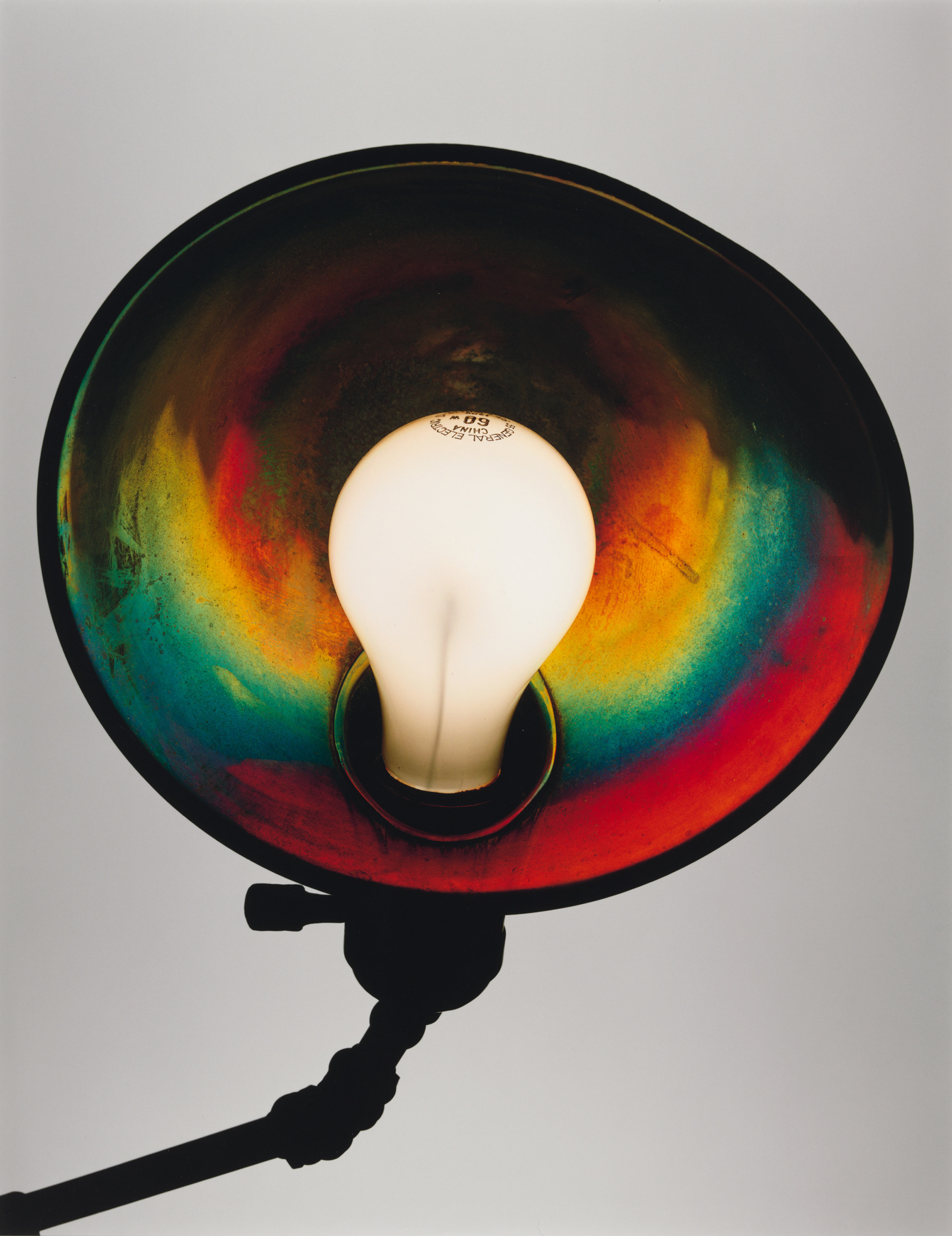
Irving Penn, Bedside Lamp, New York, 2006. Pigmented inkjet print, 28 7/8 x 22 1/2 inches (73.3 x 57.2 cm), Edition of 17. © The Irving Penn Foundation Courtesy Gagosian
Cigarettes, flowers, lamps
From the 1960s onward, Irving Penn became increasingly interested in ordinary objects. He photographed crushed cigarettes, isolated flowers and bedside lamps, sometimes with the same solemnity as a royal portrait. In some series, the objects seem almost to float in space. In others, they become abstract landscapes. Penn often said that photography could reveal a hidden beauty in ordinary things: a cigarette butt becomes a sculpture; a flower becomes architecture.
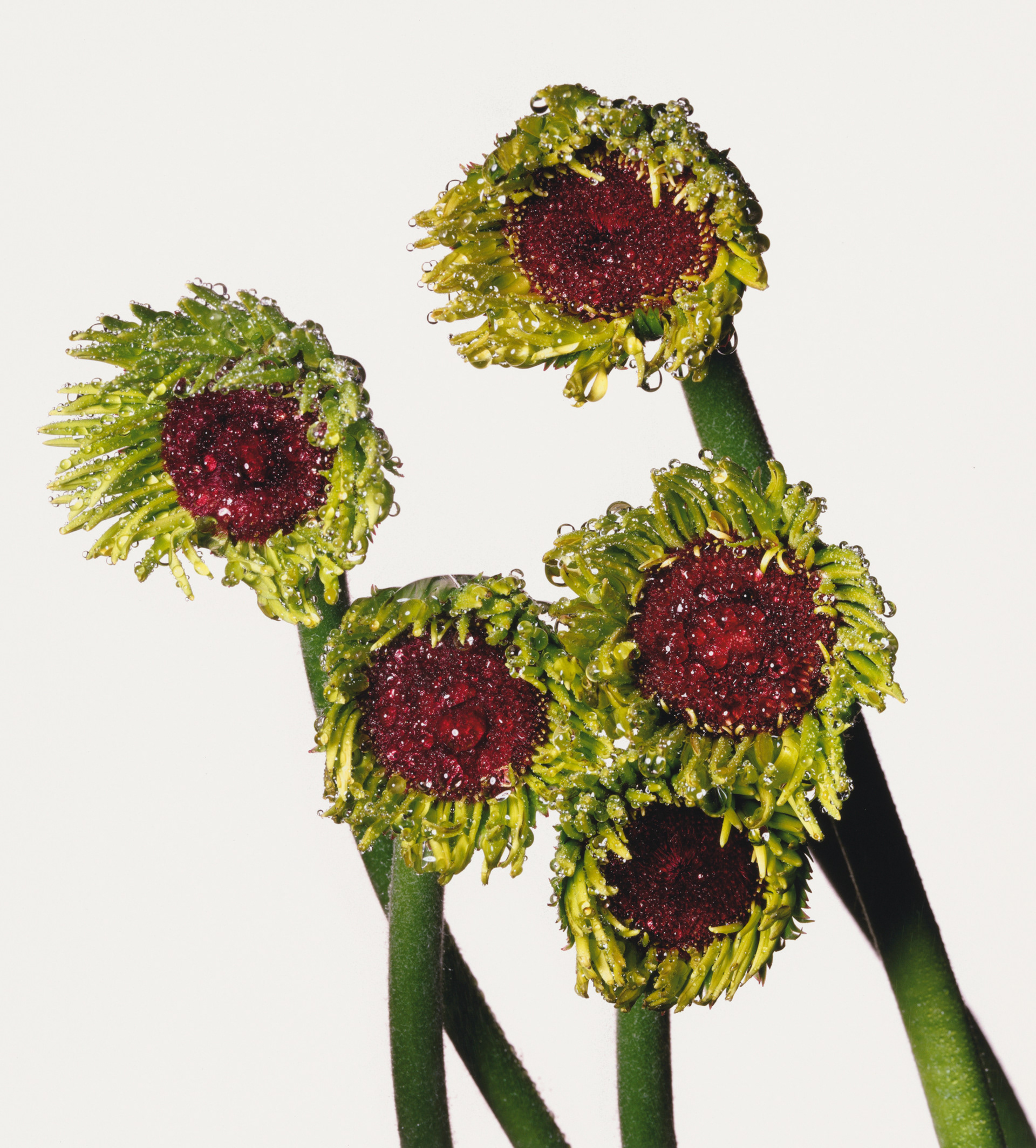
Irving Penn, Gerbera Daisy / Gerbera asteraceae, New York, 2006. Pigmented inkjet print, 17 7/8 x 16 1/4 inches (45.4 x 41.1 cm), Edition of 17. © Condé Nast Courtesy Gagosian
A forgotten piece of canvas
In the early 1950s, Irving Penn found in his studio an old piece of canvas used as a photographic backdrop. Over time, the fabric became dirty, creased and marked by traces of use. Instead of replacing it, he chose to keep using it. This imperfect background produced something unexpected: it absorbed the light without attracting attention. Neither black nor white nor truly neutral, it created a suspended atmosphere, almost outside time. Penn quickly realized he had found the perfect tool. In his portraits, this backdrop acts like an echo chamber: it isolates the subject while giving it an almost sculptural presence.
Radical minimalism
In the 1940s and 1950s, fashion photography was still highly narrative: luxurious décors, sophisticated interiors, gardens, staircases, balconies. Penn did exactly the opposite. He placed the model in front of this slightly dirty grey background, lit with precise light, and allowed the body to draw the image. The result: silhouettes become almost abstract structures. The small irregularities of the canvas (creases, darker areas, traces of wear) give the image a subtle depth. This stripped-down aesthetic profoundly influenced modern fashion photography, from Richard Avedon to Peter Lindbergh.
The obsession with printing
Penn was not only a photographer. He was also one of the greatest photographic printers of the twentieth century. He constantly experimented with processes: platinum-palladium, dye transfer, pigment prints. Some images were reprinted for decades. The photograph Seine Rowboat (1951) exists in several versions, each with subtle variations in color and contrast. For Irving Penn, the work did not end at the moment of exposure. It truly began in the darkroom.
Today, in an era of instant images, Penn’s work impresses with its slowness. Each photograph seems to have been constructed with almost monastic patience. Looking at Penn is to rediscover a simple idea: an image can be spectacular without ever raising its voice.