
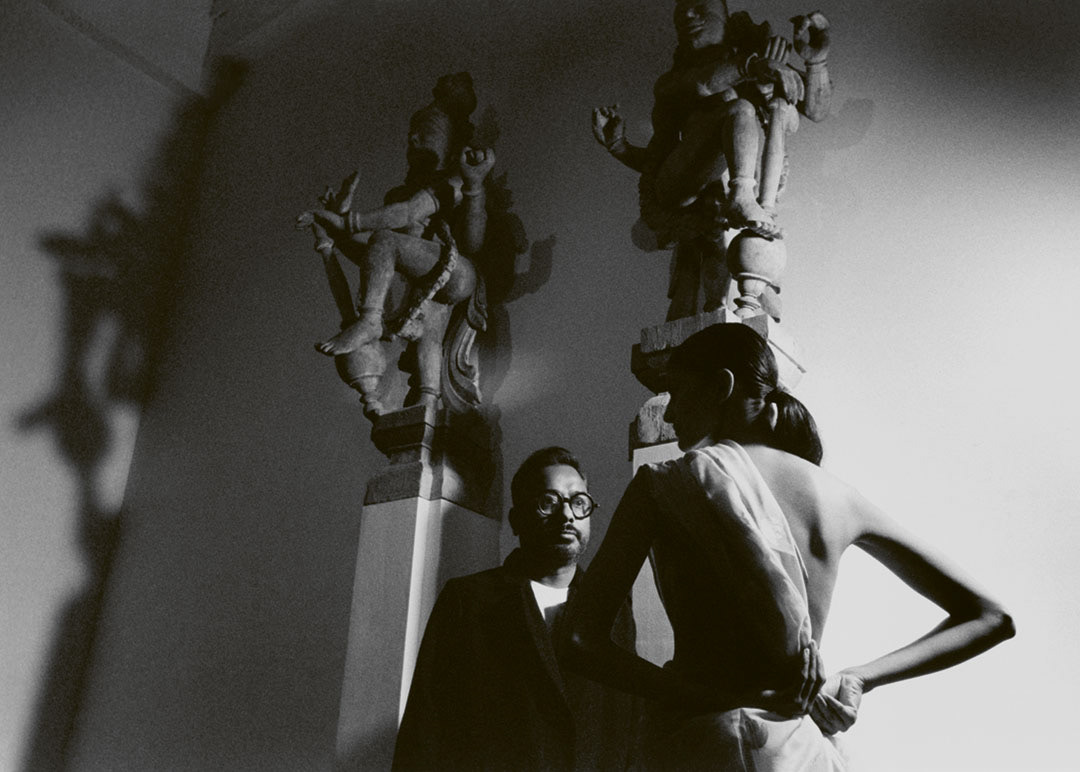
Sanjay Garg: The Idea of a Futuristic Tradition
Sanjay Garg does not speak about textiles as product. He speaks about them as politics, anthropology, memory and resistance. Founder of Raw Mango, he has spent nearly two decades rethinking handloom, taste and the sari, not as nostalgia, but as living systems. In this conversation, he reflects on nation building, anger, craft, Delhi, and what it means to fracture tradition without abandoning it.
How did your relationship with textiles begin?
I’ve been a student of design, and I always thought that I am somewhere part of nation building. Textile happened to be a very essential part of our national fabric: the fabric of a society or a country in the making. Fashion is very recent to us. The garment, cutting and making shape, is not more than 100 years old. But India is known for textiles. Handloom, as Gandhi said, is as essential as eating and cooking. Everyone needs to weave. And that has almost become passé. So I questioned myself: can design bridge that gap? Can design bring it back to the audience? I don’t need patronage. I’m tired of that word. I cannot go with a begging bowl to museums, rich people or the government for subsidies. How do I stand on my own feet with design? To me, design is as important as a doctor, engineer or politician in society.
Was there a particular moment when you realised that?
No specific moment. Honestly, I wanted to be an activist. I wanted to rewrite every damn thing before sustainability became something people abused by overusing it. I was annoyed by the way India was portrayed, by others and by ourselves. The question of taste has bothered me so much. It’s not just visual taste. It decides everything beyond that. It reflects everything. You walk into a room and everything communicates something. I thought it was my role to fix it, whether in fashion, weddings, styling. Everything was becoming uglier. Borderline vulgar aesthetics. We were not that country.
Why the name Raw Mango?
When you think of a brand, you think of a taste. When a fruit is ripe, it’s dead. When it’s unripe, there is room. There is depth. It’s not yet black. There is beauty in imperfection. Handloom is imperfect. A machine-made metre is perfect and cheaper. But imperfection has beauty, the beauty of the hand that created it. Mango comes from there. It reminds me of childhood and memory. It’s ongoing, like reform. Indian is like mango.
How do you balance reinvention and preservation?
When you step out of a door, there is right and left. Both are not wrong. You choose. I absolutely believe in preservation and absolutely believe in fracturing it. Every design has an age. Some have a thousand years, some ten. Some have a right to exist. Some need to die. Revival alone means it dies again. Museums may pay for it, but it’s still in a museum. I want textiles to live on people in my lifetime. You must understand the rule of the game before you fracture it. To make a bad design, I first had to understand what good design is. Picasso could distort the human form because he mastered it first. That is the beauty : knowing what to break from.
What do you want people to feel when they wear Raw Mango?
We have something to offer the world. Every country must decide what it is good at. When something is made in India, it is not just design. It is craft, identity, culture, amalgamation. But I don’t accept sympathy. Just because it’s handmade doesn’t mean it deserves respect. It must be good design, contemporary, intelligent.
How do you approach working with artisan communities?
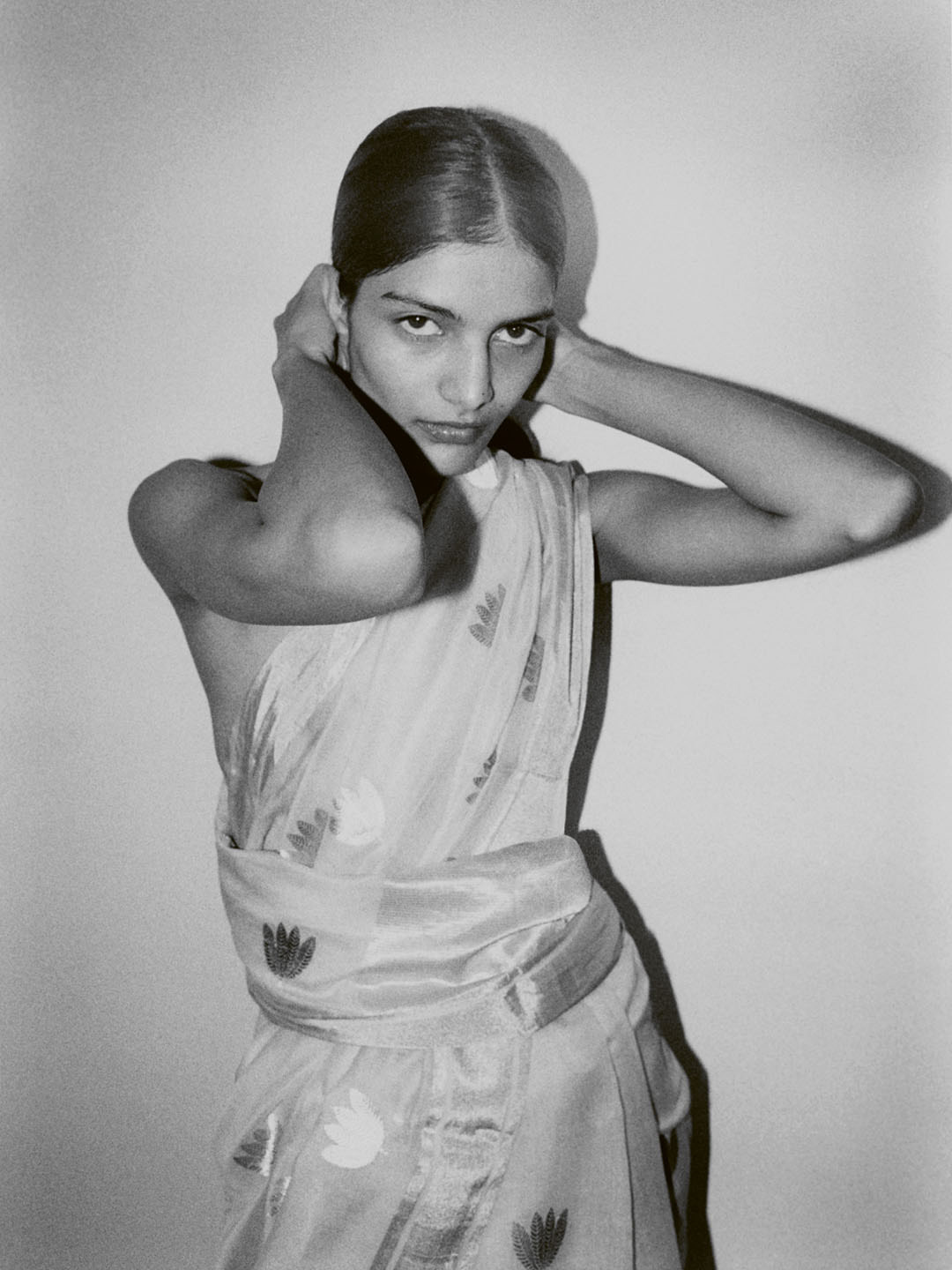
First, I understand what they are making. I buy from them. I sit with them. Then I see what problem I can solve. It is a two-and-a-half-year journey. They spend a year making a collection. Then sampling. Then dialogue. It starts with a thought: why do I do what I do? Many things come from anger. Social stigma. If someone says bright colour is “villager-like,” I want to fight that. If embroidery defines India abroad, I want to put textile next to an Hermès bag and make it equally respected.
The sari seems central to your thinking. Why?
The sari is engineered already. The border is thicker to manage wear and tear. The pallu has weight. It drapes because of construction. A sari can be worn in 108 documented ways. The wearer decides the silhouette. In the West, someone decides the silhouette for you. In the sari, the wearer designs it. Tradition is ongoing. It’s like a river. The minute it stops, it stinks. Raw Mango is a futuristic tradition.
How do art, film and music nourish you?
I love filmmakers like Mani Kaul. I admire Jil Sander. I think Jonathan Anderson is incredibly clever; he knows how to occupy space in your head. That is what a brand should do. I love Kanye West’s way of thinking… Provocative, problematic, but challenging. Society is fragile today. Too moral, too afraid. Music is essential. We created our own music for campaigns. We made Indian local music cool so people could dance to it. I want to influence taste in every way, not just clothes.
What is your relationship with Delhi?
I love Delhi. People abuse it constantly. The more they do, the more I love it. Delhi doesn’t ask where you come from. It accepts you. We are surrounded by six states rich in craft. It is fertile in design and knowledge. Delhi has extremes: aggressiveness, sophistication, ugliness. But that contrast is India. My relationship with Delhi is almost physical. I feel responsible for it.
How do you feel about the future?
Very optimistic. Very angry, optimistic, provocative. If things don’t change, then who else will change them? I’m not scared of AI. The more AI there is, the more what I do by hand will be respected. The past is mapping the future. Everything is moving faster. But you must stay present.
Photos by Ashish Shah